
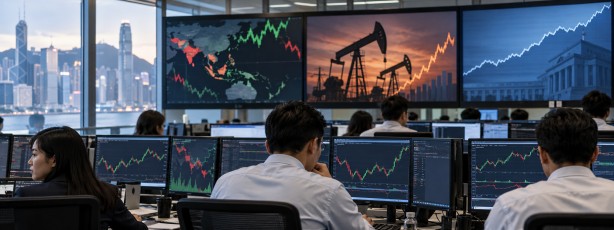
Asian markets exhibited mixed performances on Friday as investors navigated rising oil prices, soaring government bond yields, and uncertainties surrounding the ongoing Middle East conflict. The financial landscape was impacted by these factors, which have raised concerns about inflation and economic stability.
Oil prices, which surged over 3% on Thursday, slightly declined during Friday trading. Brent crude fell by approximately 0.7%, reflecting apprehensions about energy supplies and inflationary pressures. The geopolitical tensions in the Middle East have further strained the already tight oil market, contributing to these concerns.
Investors also focused on government bond yields, which reached new heights. The US 10-year Treasury yield climbed to its highest level since 2007, while the 30-year yield hit a peak not seen since 2004. Japan’s 10-year government bond yield reached a fresh 30-year high, indicating a broader trend of rising yields across major economies.
Stock markets across the region responded to these developments with varied results. Japan’s Nikkei 225 rose by 1.2%, whereas Hong Kong’s Hang Seng Index dropped by 1.8%. Meanwhile, markets in Shanghai, Seoul, and Taipei remained closed due to holidays, providing some respite from the volatility.
The complex dynamics of US-China trade relations also played a role in shaping investor sentiment. Although Washington and Beijing agreed to extend their trade truce for two more months, unresolved issues such as tariffs, agricultural purchases, rare-earth supplies, and technology restrictions continue to loom large.
Overall, the combination of rising oil prices, elevated bond yields, and geopolitical tensions presents a challenging environment for investors, who must navigate these uncertainties as they assess the potential impacts on global markets and economic growth.