
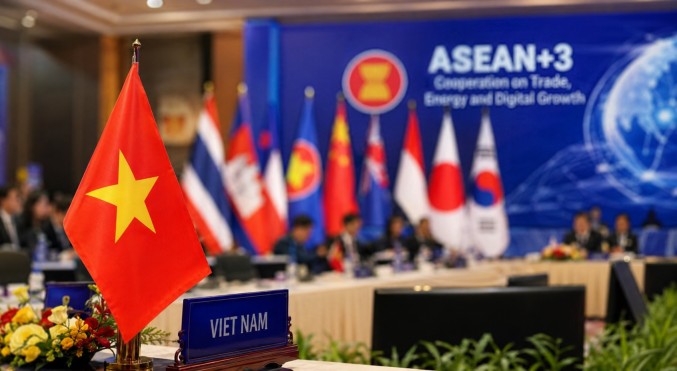
During the recent ASEAN+3 Foreign Ministers’ Meeting in Manila, Vietnam made a compelling case for enhanced economic integration and regional resilience. Foreign Minister Lê Hoài Trung called on ASEAN nations, alongside China, Japan, and South Korea, to bolster cooperation in critical areas such as trade, connectivity, and sustainable development. The minister highlighted the need for effective implementation of regional trade agreements while advocating for expanded collaboration in energy security, food security, digital transformation, innovation, and clean energy.
Minister Lê Hoài Trung also suggested that the region should explore mechanisms for energy cooperation to better prepare against future economic and geopolitical challenges. This strategic move aims to strengthen the region’s economic resilience and ensure a robust response to any potential disruptions in the global landscape.
The meeting underscored the significance of the ASEAN+3 framework as a vital platform for regional cooperation. Member countries expressed their commitment to fast-tracking the ASEAN+3 Work Plan for 2023–2027. They agreed on the necessity of enhancing financial cooperation, expanding regional food reserves, and initiating renewable energy projects. Additionally, there was a consensus on the importance of investing more in education, technology, tourism, and cultural exchanges to foster a more integrated regional community.
In a show of solidarity, China, Japan, and South Korea reaffirmed their support for ASEAN’s central role in regional matters. They pledged to continue backing the advancement of the ASEAN Community Vision 2045, demonstrating their commitment to a stable and prosperous Southeast Asian region.