
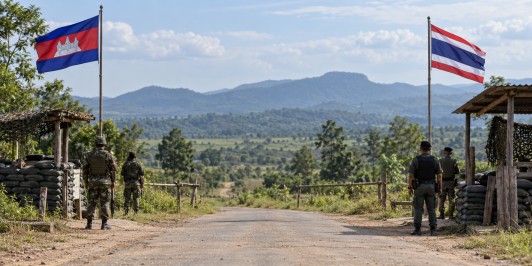
The tense standoff between Cambodia and Thailand over disputed border territories remains unresolved, as Cambodia insists that a recently established ceasefire cannot be leveraged to redraw international boundaries or determine legal ownership. The ceasefire, agreed upon by both nations in December, aims to maintain current military positions and ensure the safe return of civilians displaced by previous conflicts.
According to Cambodian Information Minister Neth Pheaktra, the ceasefire, which took effect on December 27, is not intended to influence the ultimate delineation of the border. Meanwhile, Pheaktra accuses Thai forces of reinforcing their presence in contested areas claimed by Cambodia. Allegations include the installation of barbed wire, digging of trenches, and the construction of roads and military facilities by Thai forces, which Cambodia argues could alter the status quo rather than preserve it.
Amid these tensions, over 20,000 people have been displaced due to the conflict, according to Cambodian officials. Pheaktra underscores that the ceasefire’s success should be measured by the safe return of these displaced civilians to their homes. The situation highlights the human impact of the ongoing territorial dispute and the importance of maintaining peace to allow affected communities to recover.
In a separate move, Thailand has been actively engaging with international stakeholders by hosting foreign delegates, ASEAN observers, and international journalists in regions near the disputed border. During these visits, Thai authorities presented claims related to the use of casino buildings and alleged cross-border criminal activities, particularly around the O’Smach casino area and the Choam crossing. Cambodia, however, disputes Thailand’s assertions of control over these areas, maintaining that the territory rightfully belongs to Cambodia.
The ongoing disputes and military activities underscore the fragility of the current ceasefire and the complexities involved in resolving the border conflict. Both countries face the challenge of navigating diplomatic negotiations while ensuring regional stability and addressing the needs of affected civilians.