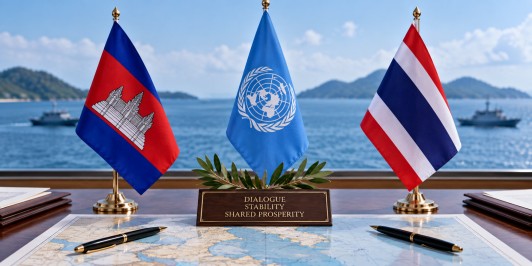
Cambodia and Thailand have embarked on a conciliation process supported by the United Nations to address a longstanding maritime boundary dispute in the Gulf of Thailand. The initiative is being conducted under the United Nations Convention on the Law of the Sea (UNCLOS). At the inaugural meeting, foreign ministers from both nations presented opening statements, setting the stage for the proceedings.
Central to Cambodia’s approach is a proposal to establish a definitive maritime boundary with Thailand. Alternatively, Phnom Penh has suggested a joint development plan that would enable both countries to exploit the resources in the contested area collaboratively. Meanwhile, Thailand has expressed a desire for the discussions to remain focused solely on boundary delimitation. Despite Bangkok’s previous preference for direct negotiations to settle the dispute, the country has committed to engaging in the current process with sincerity.
The discord involves approximately 26,000 square kilometers of waters that have been contentious for over 25 years. This area is believed to be rich in natural gas and oil reserves, adding an economic dimension to the dispute. In 2001, both nations reached an agreement that outlined a framework for the joint development of these resources, but this arrangement was terminated by Thailand in May. The termination followed a period of heightened tensions marked by deadly border clashes between the two countries.
In response to the situation, Cambodia initiated the compulsory UNCLOS conciliation process in June. This mechanism involves an independent panel that can offer recommendations, although the conclusions drawn are not legally binding for either party involved. The process seeks to provide a pathway toward resolving the issues that have long troubled Cambodia and Thailand, potentially paving the way for future cooperation in resource development.