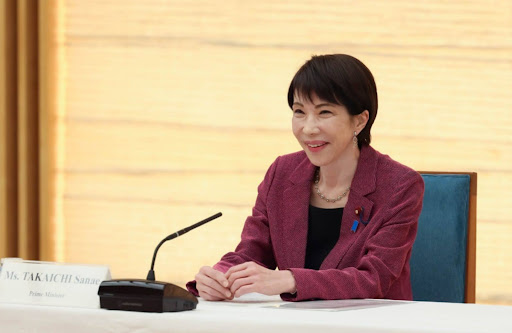
Japan has announced the biggest-ever release from its national oil reserves, with Prime Minister Sanae Takaichi authorizing the deployment of 80 million barrels to domestic refiners starting Thursday, as public anxiety over shortages of fuel and even toilet paper begins to take hold. The US-Israel conflict with Iran has disrupted oil tanker routes through the Strait of Hormuz, triggering the emergency response and raising questions about the availability of everyday goods among Japanese consumers. The government is working to address both the real supply disruption and the psychological dimensions of the unfolding crisis.
Social media has been filled with alarming posts about potential shortages of toilet paper, cat food, and other household essentials, drawing comparisons to the panic buying that occurred during the early stages of the Covid-19 pandemic. The Japan Household Paper Industry Association responded by clarifying that roughly 97% of Japan’s toilet paper supply is produced domestically from recycled materials, with no dependence on Middle Eastern oil. Both industry representatives and government officials urged consumers to avoid unnecessary stockpiling.
Japan imports over 90% of its crude oil from the Middle East, making the current Hormuz disruption an immediate economic concern rather than a distant geopolitical abstraction. The 80 million barrel reserve release — equivalent to 45 days of domestic consumption — is the government’s primary tool for ensuring supply continuity. At 1.8 times the previous record deployment made after the Fukushima disaster, the scale of the response signals the government’s determination to stay ahead of the crisis.
Fuel prices reached a record ¥190.8 per litre before the government introduced subsidies capping gasoline at approximately ¥170. These subsidies will be reviewed weekly and adjusted as market conditions evolve. The government’s active management of retail fuel prices is intended to prevent the energy crisis from becoming a broader inflationary shock for households and businesses.
Prime Minister Takaichi has navigated the international dimensions of the crisis with characteristic restraint and purposefulness, declining military involvement while accelerating diplomatic engagement. Her refusal to send Japanese naval forces to the Hormuz region — made directly to Trump — was grounded in Japan’s pacifist constitution and enjoyed broad domestic support. Japan’s strategy is to outlast this crisis through economic resilience, diplomatic activity, and the strategic reserves built up over decades of careful planning.